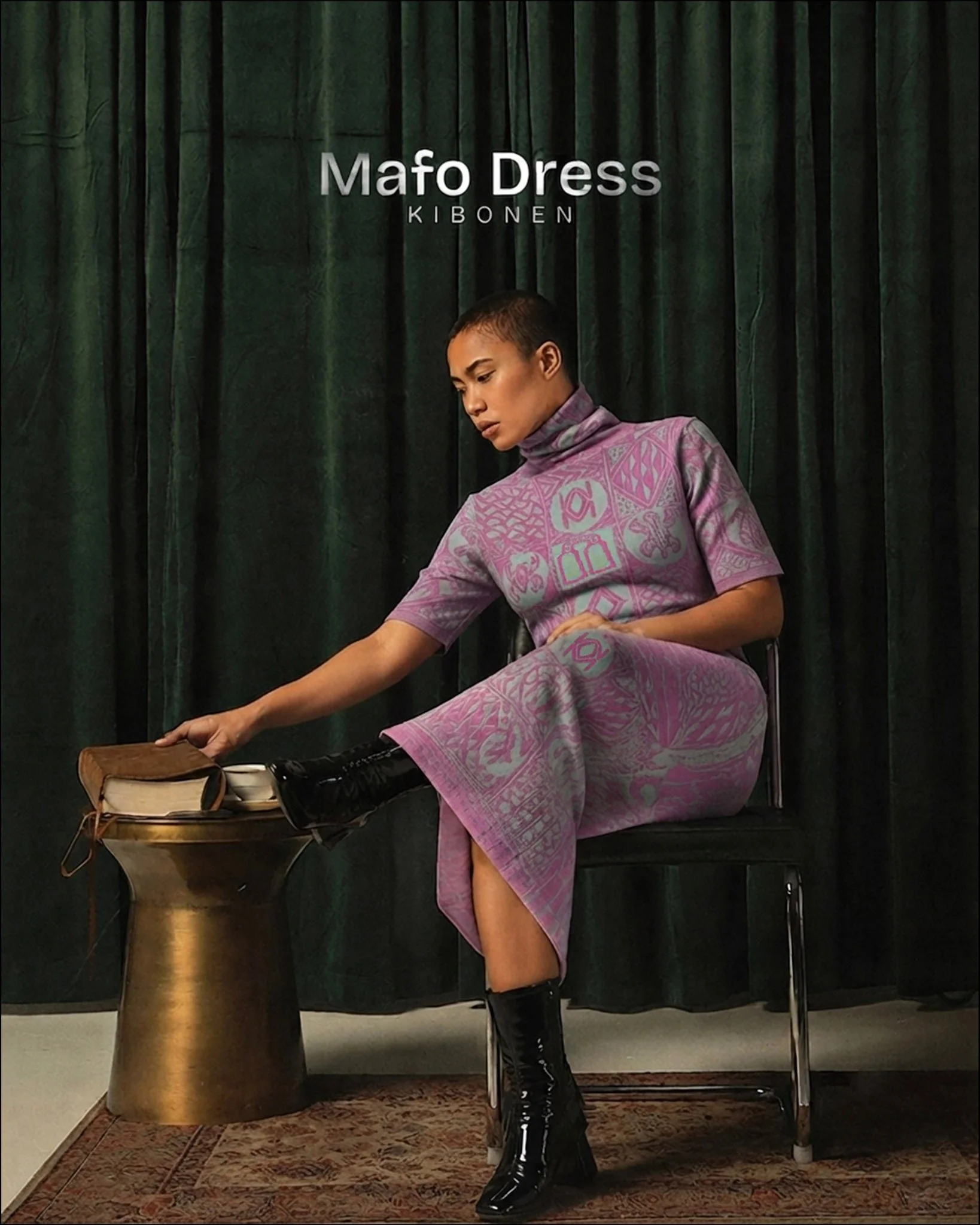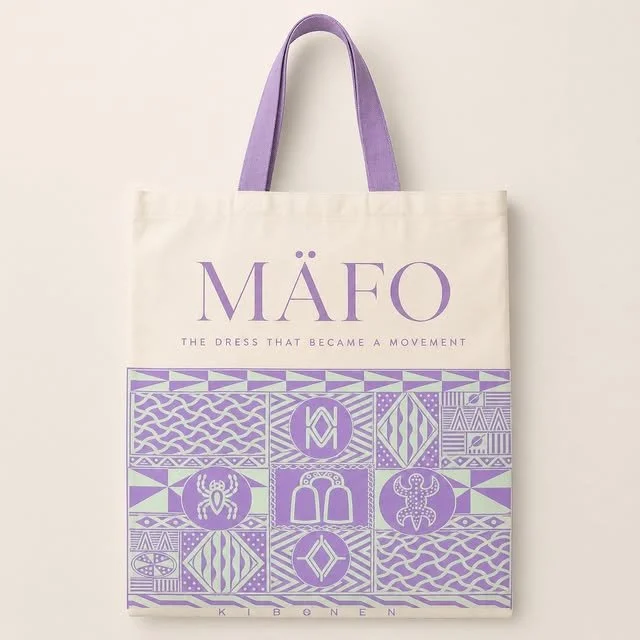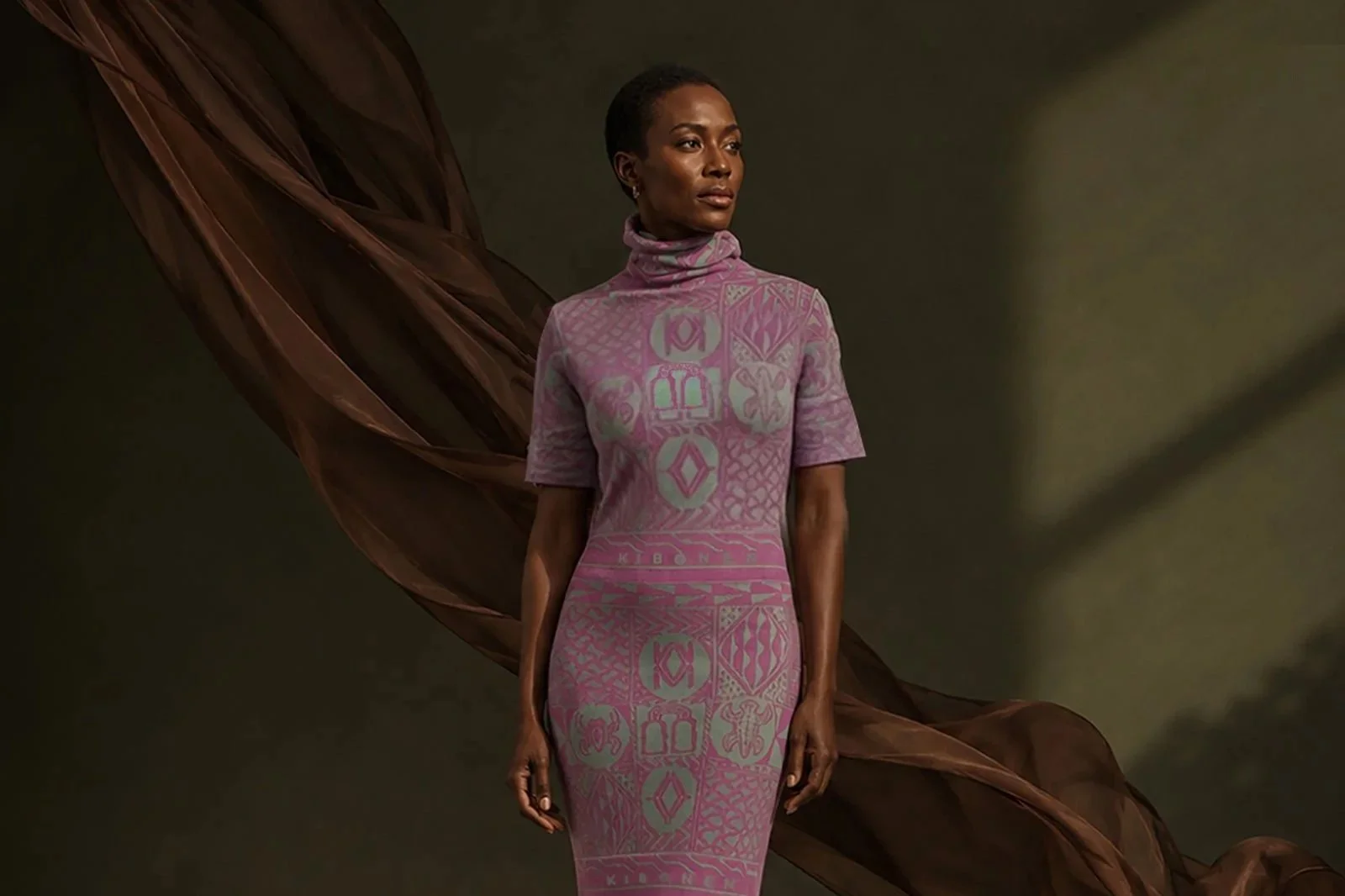
Image created by kibonen.com
MEET KIBONEN:THE WOMAN BEHIND THE LABEL
By FIDIWEST
There are fashion designers who make clothes, and then there are designers who build worlds.
Kibonen belongs firmly to the second category.
Long before the New York runway lights, the fashion associations, the manufacturing ventures and the increasingly global conversation around African fashion, there was an instinct at the heart of her work: to take heritage seriously without allowing it to become predictable.

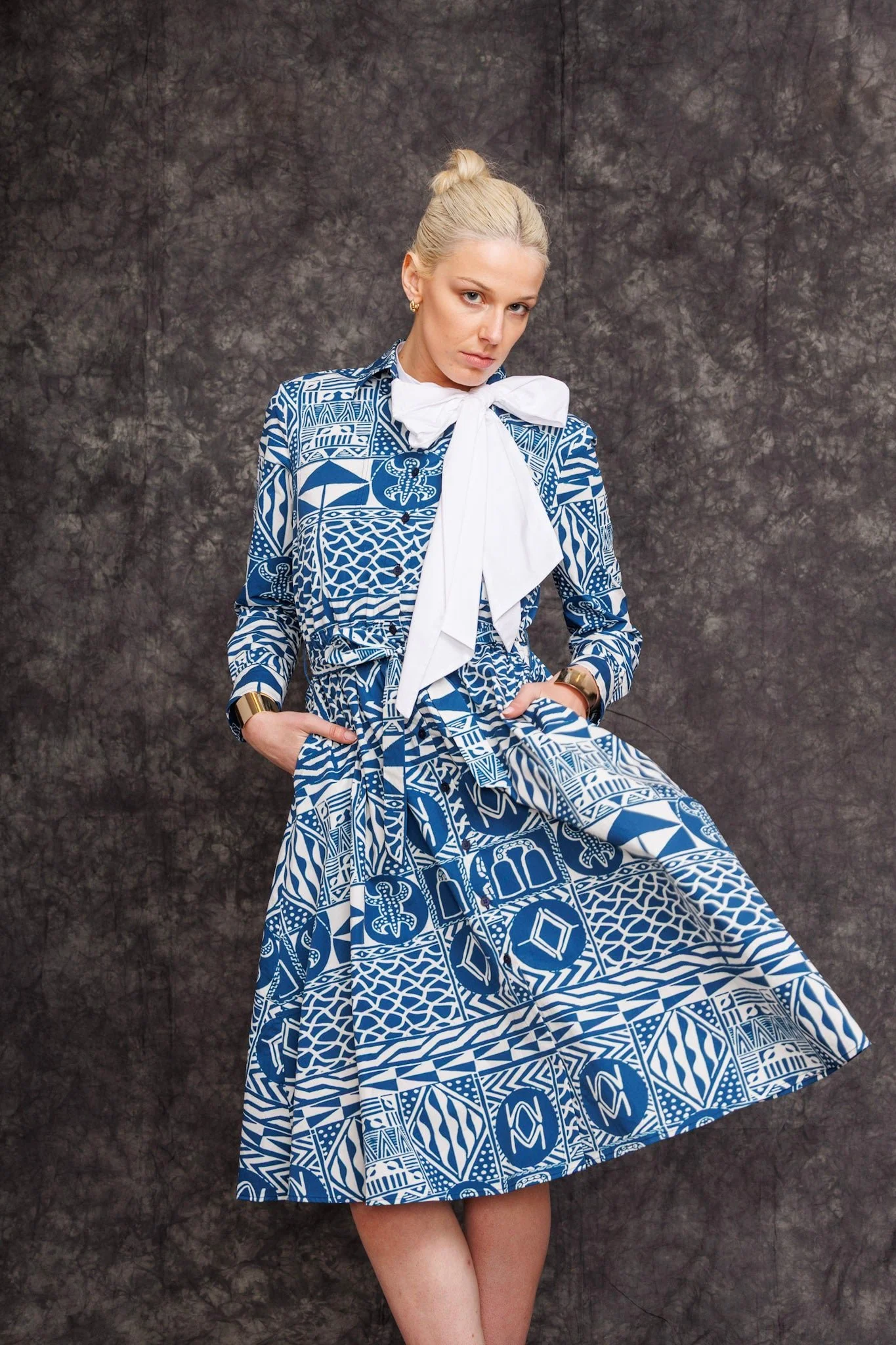

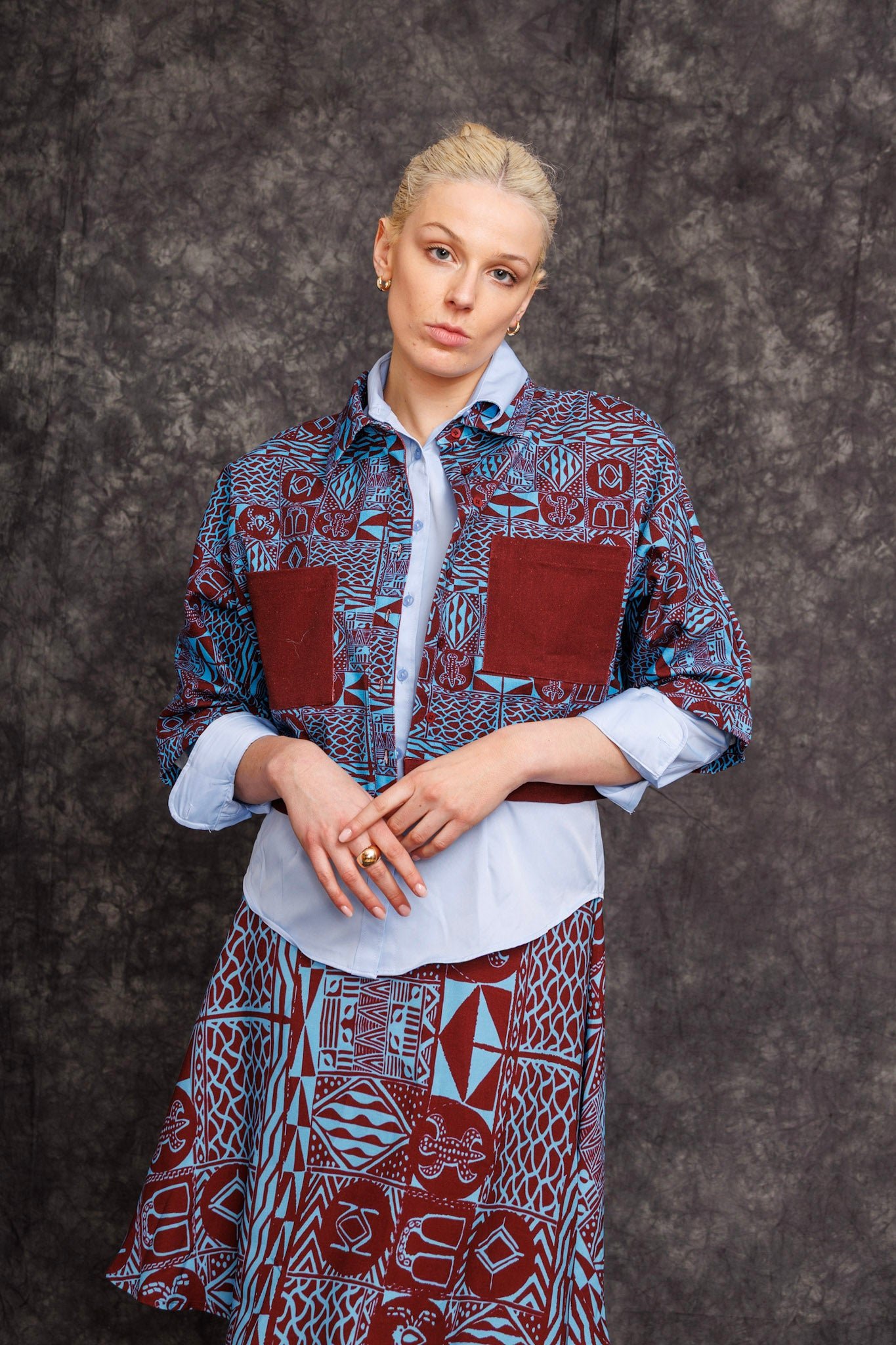
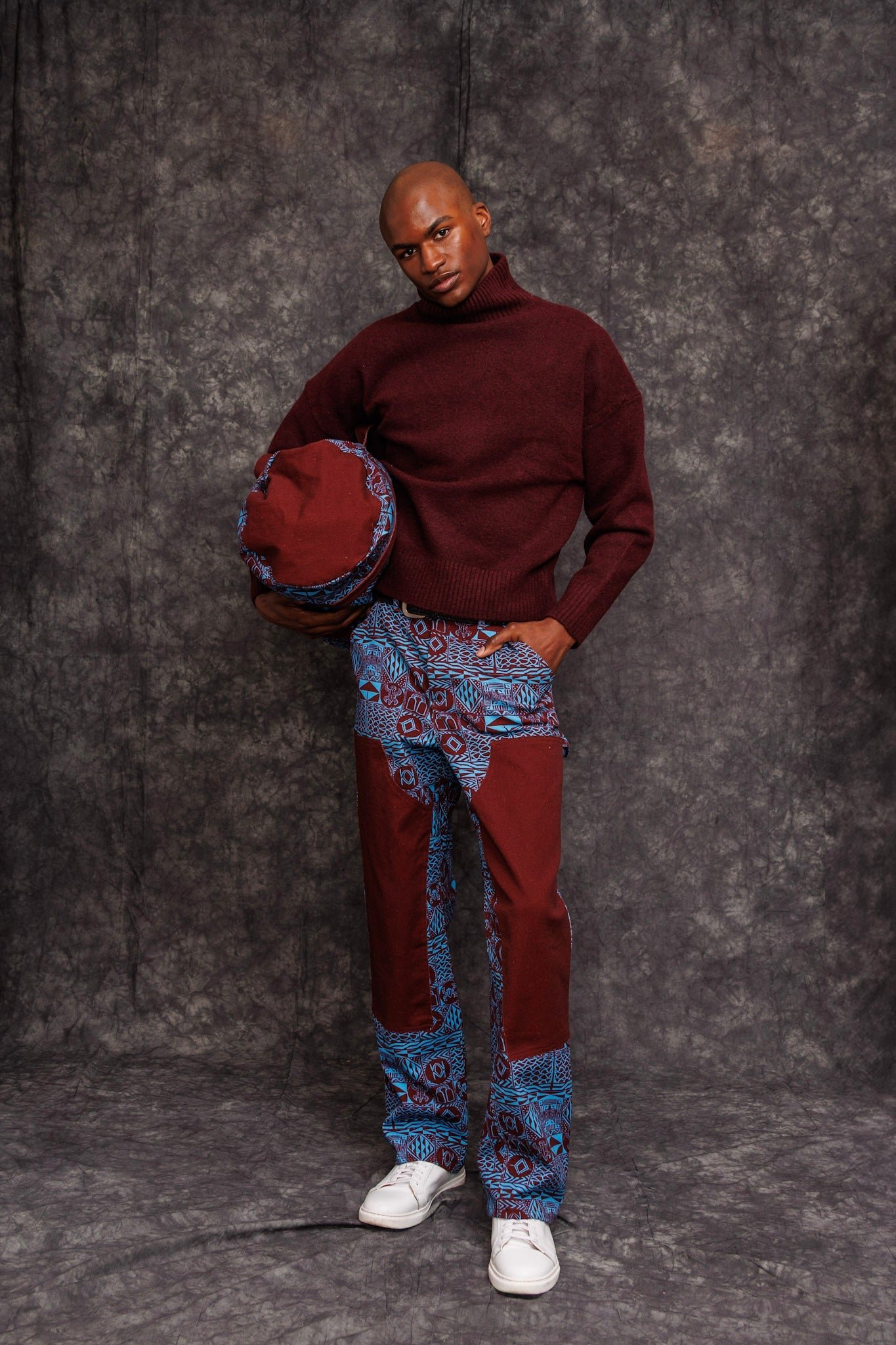
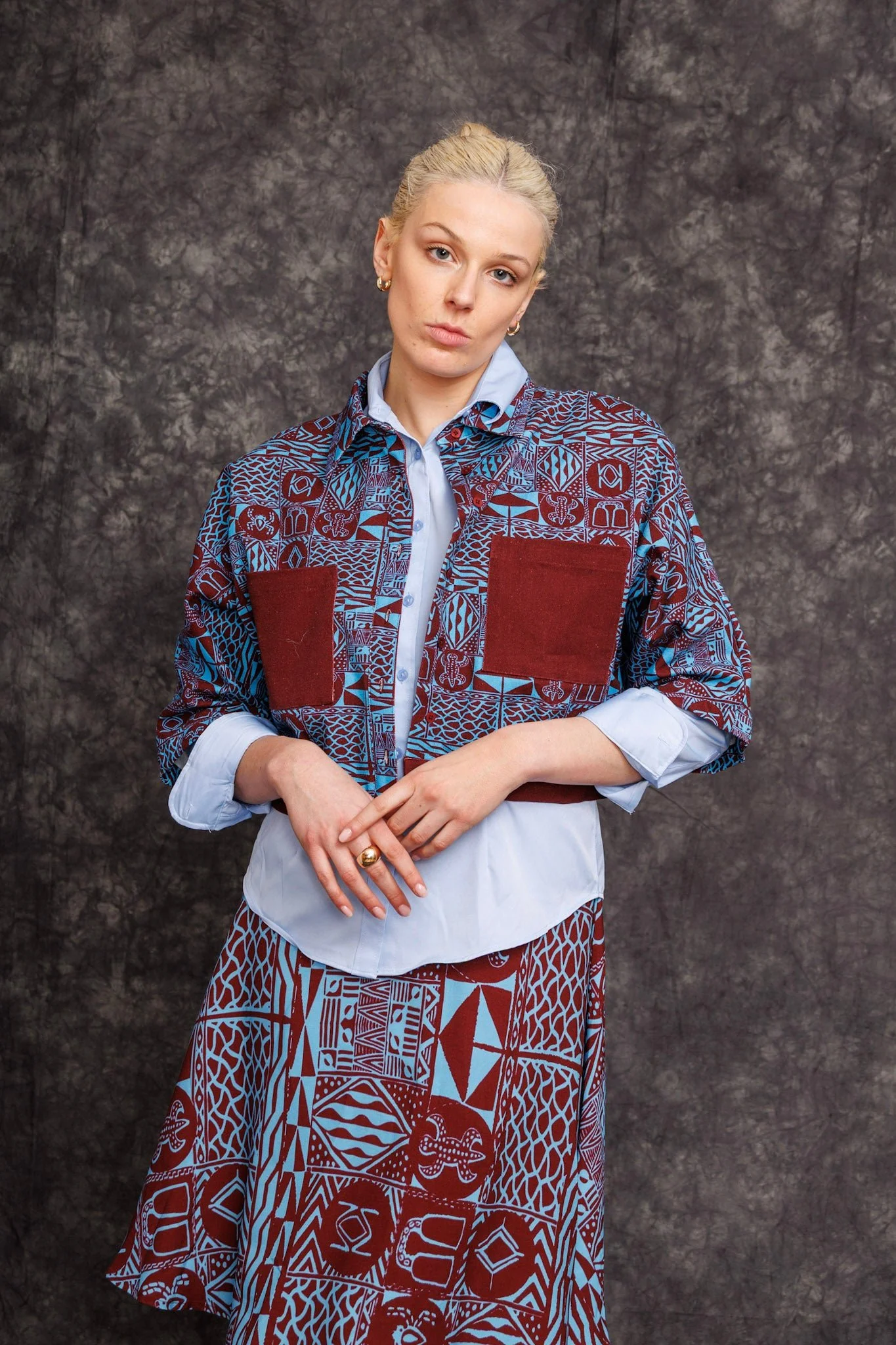
Today, Kibonen occupies a distinctive space between African design, contemporary fashion and New York's relentlessly competitive creative landscape. Her career is not simply a chronology of collections and titles. It is a study in movement—between Cameroon and New York, tradition and modernity, design and enterprise, the intimate language of clothing and the larger machinery of fashion.
Her story is, in many ways, about refusing to remain in one category.
Kibonen has been the founder of multiple fashion ventures, a designer, a manufacturing entrepreneur, an industry advocate and a creative professional who has worked inside one of American fashion's most recognisable houses. She has also built her career with an unusually hands-on understanding of what happens after the sketch: the fabric, the pattern, the fitting, the production, the business and, ultimately, the woman wearing the clothes.
That breadth is part of what makes her interesting.

FROM CAMEROON TO NEW YORK
Kibonen's fashion career began in Cameroon, where she founded KiRette Couture in 2009, creating contemporary, chic apparel inspired by Africa.
The description is deceptively simple. African-inspired fashion has often been asked to perform a familiar set of tricks: announce its origins loudly, lean heavily on recognisable motifs and make heritage immediately legible. Kibonen's trajectory suggests something more nuanced.
Her work has consistently operated from the premise that African influence does not have to mean historical costume. It can be sophisticated. It can be directional. It can be urban. It can belong in the same conversation as contemporary fashion anywhere in the world.
That sensibility travelled with her.
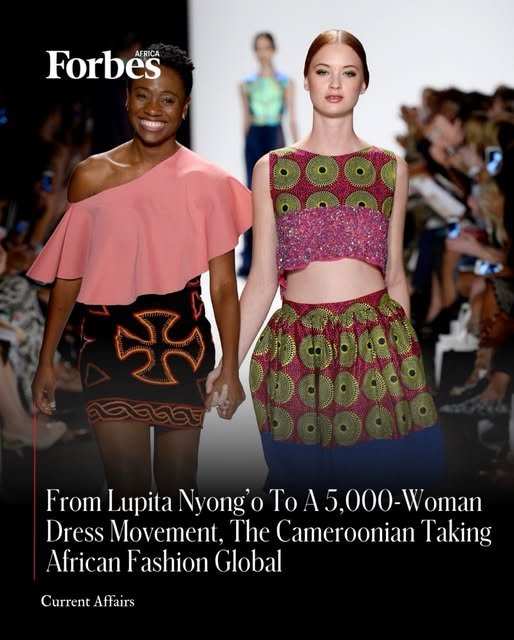
In 2012, she founded KibonenNY, establishing the New York chapter of a fashion story that had begun in Cameroon. By 2014, she was working as a fashion designer at Kibonen and had taken one of the most significant steps of her career: showcasing a capsule collection during Mercedes-Benz Fashion Week New York for Spring/Summer 2015 at the Theater at Lincoln Center.
For an emerging designer, Lincoln Center was more than a venue. It was a statement of arrival.
New York fashion is not particularly sentimental about where you come from. It is a city that demands a point of view—and then asks you to defend it season after season.
Kibonen brought hers.

THE NEW YORK EDUCATION
There is another chapter in Kibonen's story that reveals a great deal about her approach to fashion: her time as an intern with Donna Karan International in 2014.
The title may sound junior. The experience was anything but incidental.
At Donna Karan International, Kibonen was involved in researching design concepts, sketching high-fashion designs, selecting fabrics and working with pattern makers, embroiderers and beaders in New York's Garment District. She also assisted with celebrity fittings and alterations.
It is the kind of experience that strips away the fantasy of fashion and replaces it with something more exacting.
A beautiful garment begins as an idea, but it becomes fashion through an extraordinary number of decisions.
The fabric has to behave. The pattern has to work. The embellishment has to serve the design. The fitting has to be right. The finished piece has to move on a body rather than simply exist beautifully on a page.
Kibonen's experience inside that ecosystem gave her exposure to the mechanics of high fashion at one of New York's established houses while she was simultaneously developing her own design identity.
That combination matters.
Because Kibonen's career has never been exclusively about the image of fashion. She has repeatedly engaged with the infrastructure beneath it.
BEYOND THE RUNWAY
If the fashion industry is often obsessed with the front of the house, Kibonen has spent much of her career understanding the back of it, too.
From 2016 to 2020, she served as Founder and CEO of Made in Camer, an apparel manufacturing workshop in Bamenda, Cameroon.
The move into manufacturing represented an important expansion of her fashion vocabulary. Designing clothing and producing clothing are not the same discipline. One is concerned with vision; the other is concerned with systems.
Materials. Labour. Construction. Quality. Capacity. Timelines.
To understand both is to understand fashion more completely.
That entrepreneurial instinct continued with Cameroon Clothing Company, where Kibonen served as Partner and CEO from 2020 to 2023 in Buea, Cameroon.
The geography is significant. Her career has not been a one-way journey away from Cameroon toward New York. Instead, it has moved between ecosystems, connecting creative ambition with production and industry-building.
It is an approach that feels particularly relevant at a moment when conversations about African fashion are becoming increasingly sophisticated.
The question is no longer simply whether African designers can be seen internationally.
The more interesting question is whether African fashion can build the creative, manufacturing and commercial infrastructure necessary to define its own future.
Kibonen has spent years working across precisely those fault lines.
There is an unexpected early chapter in her career that adds another dimension to the designer.
Before fashion became the central headline, Kibonen worked in sales and management.
From 2006 to 2009, she was a Sales Coordinator at P&G Prestige Products, where she was responsible for supporting sales goals. In 2011, she became Head of Xerox Cameroon, managing sales, technical and administrative teams in Douala.
On paper, these roles belong to a completely different professional universe.
In practice, they may explain something about the way Kibonen has approached fashion.
Fashion is creative, certainly. But it is also an industry of negotiation, deadlines, budgets, relationships, teams and execution.
A designer who understands business is operating with an additional language.
Kibonen's career suggests that she has never treated creativity and commerce as opposing forces. Instead, they appear to coexist within the same professional identity.
It is perhaps one reason her career has extended beyond designing collections into building companies and participating in the broader fashion ecosystem.
THE BUSINESS OF FASHION


Since 2011, Kibonen has also served as President of the Cameroon Fashion Industry Association of America, based in Manhattan.
The role moves her from designer to advocate.
That distinction matters because fashion industries do not become influential simply because individual designers become successful. They require networks, institutions, visibility and relationships capable of connecting talent to opportunity.
For a Cameroonian designer working in New York, that kind of bridge-building has particular resonance.
Kibonen's professional life has therefore developed on several parallel tracks: designer, founder, manufacturer, executive and industry representative.
Each role gives her a different perspective on the same question: what does it mean to build a meaningful fashion career across borders?
Her answer appears less interested in choosing one identity than in allowing them to inform one another.
BUILDING AN INDUSTRY, NOT JUST A LABEL
There is an old fashion fantasy that the designer must belong somewhere specific.
Paris. Milan. London. New York.
But contemporary fashion is increasingly defined by designers who exist between places, cultures and references.
Kibonen's career is distinctly transnational. Cameroon is not simply an origin story in her biography, while New York is not merely a destination. Both have become part of the language through which she operates.
That tension can be productive.
Cameroonian heritage brings history, textile traditions, cultural references and visual vocabulary. New York brings immediacy, competition, multiculturalism and an appetite for reinvention.
The resulting conversation is neither entirely traditional nor entirely Western.
And perhaps that is the point.
The most compelling contemporary African fashion does not necessarily ask permission to enter an established fashion system. It challenges the system to expand its understanding of what fashion can look like, where it can come from and who gets to define its vocabulary.
A DESIGNER BETWEEN WORLDS
WHY KIBONEN NOWS
There is something particularly timely about meeting Kibonen now.
The global fashion industry has spent years talking about diversity, representation and the importance of African creativity. But beyond the headlines, there remains a fundamental question about who gets to build sustainable fashion businesses and creative careers from the continent and its diaspora.
Kibonen's career offers one possible answer: build broadly.
Design, but understand production.
Create a brand, but understand business.
Represent a culture, but do not allow culture to become a constraint.
Move internationally, but maintain a relationship with home.
And perhaps most importantly, understand that fashion is not only about making beautiful things. It is about creating systems through which beautiful things can continue to be made.
That may ultimately be the most interesting aspect of Kibonen's story.
The runway is visible.
The infrastructure is not.
What emerges from Kibonen's professional history is not the portrait of a designer who followed a perfectly linear path. It is something more contemporary: a creative entrepreneur whose career has evolved through seemingly disparate experiences that, in retrospect, begin to make sense together.
Sales taught her the language of commercial performance.
Management taught her how to lead.
Design taught her how to translate ideas into form.
Donna Karan International offered exposure to the discipline of an established New York fashion house.
Manufacturing gave her proximity to production.
Her ventures in Cameroon connected fashion to enterprise.
Her work with the Cameroon Fashion Industry Association of America placed her within a larger professional community.
And New York provided the stage on which these experiences could collide.
The result is a career that resists the neatness of a single label.
Designer.
Founder.
CEO.
Industry advocate.
African creative.
New Yorker.
None of these descriptions is sufficient on its own.
Together, they begin to tell the story.
THE WOMAN BEHIND THE LABEL
MEET KIBONEN
Perhaps the most Vogue-worthy thing about Kibonen is not that she has made it to New York.
It is that she has refused to let New York be the end of the story.
Her career has moved outward and back again—between Cameroon and America, design and business, creation and production, individual ambition and collective industry-building.
There is an elegance in that kind of ambition.
Not the loud elegance of a logo or a front-row invitation, but the quieter confidence of someone who understands that fashion is ultimately bigger than a garment.
It is heritage and reinvention.
It is commerce and craft.
It is identity, infrastructure and imagination.
And for Kibonen, it is also a long-term conversation between where she comes from and where she is going.
The runway at Lincoln Center may have marked one visible moment in that journey.
But it was never the whole story.
The more interesting story is everything that came before—and everything she is still building.